



What I learned from Tom Insel, the man who ran America's mental health research agency for 13 years
Last year, the National Institute of Mental Health funded 900 new research grants.
This year: 109.
Tom had checked that number himself the night before we recorded, through NIH Reporter. So had our team. When the person who ran that institution for 13 years independently verifies his own statistics before the conversation starts, you know you're about to hear something real.

Tom Insel’s Story
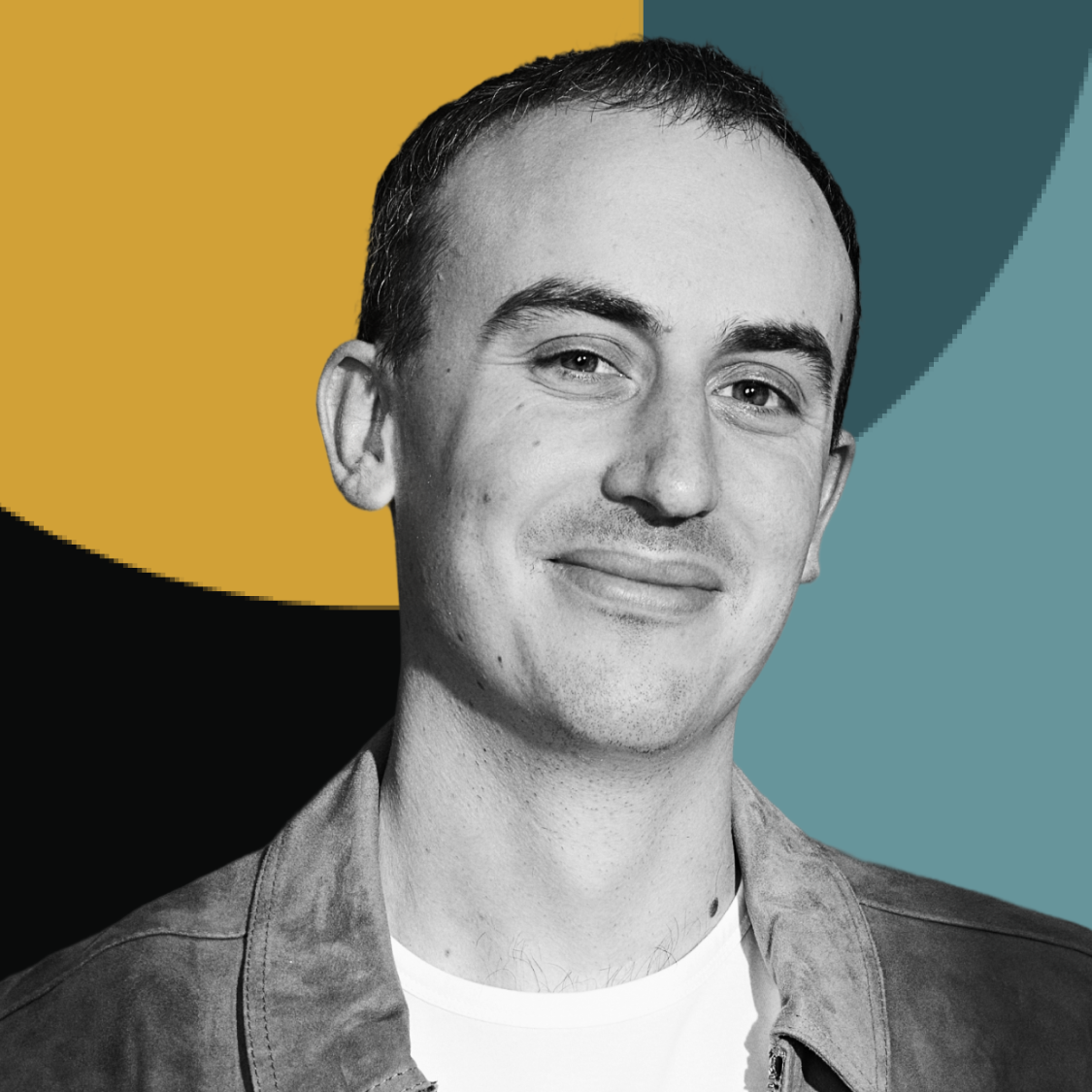
Tom Insel served as director of the NIMH from 2002 to 2015. Over 13 years, he oversaw more than $20 billion in research funding and helped position psychiatric neuroscience at the center of American mental health research. He is a psychiatrist, a neuroscientist, and now on his fifth startup, an entrepreneur.
He will be the first to tell you that none of it moved the outcomes needle nearly enough.
What makes Tom unusual is that he doesn't say this defensively. He says it like someone who has been honest with himself for long enough to actually do something about it. This conversation was one of the most clear-eyed I've had about why the mental health system is the way it is — and what it will actually take to change it.
He got fired. Then they made him the director.
One of the best things about this conversation is that it starts in the 1990s, with Tom being forced out of the NIMH intramural program for studying the wrong things.
"I was given six months to either change the direction of the lab or leave."
His crime? Studying parental care and social attachment in animals at a time when neuroscience was expected to focus on motor pathways, sensory pathways, and a narrow set of behaviors like aggression and fear. The idea of using neuroscience to study positive social behaviors was, as Tom puts it, "just about taboo."
He left. Went to Emory. Kept doing the work. Eight years later, a new NIH director came looking for someone who was technically a psychiatrist but deeply rooted in neuroscience. Tom was the only person who fit. He returned as director of the very institution that had pushed him out.
"The science that matters is the science that changes the paradigm. But the science that often gets rewarded is just putting another cell on the coral reef that somebody else has already begun."
The house was on fire
Thirteen years later, Tom left the NIMH with a confession that has defined everything he has done since.
"The house was on fire and we were working on the chemistry of the paint."
The science had advanced. The outcomes had not moved with it. The human genome was sequenced. High-field MRI opened new windows into brain activity. The neurobiology of depression and psychosis became genuinely better understood. And yet — as Tom put it — with all the venture investment, all the innovation, all the great products that followed: "you haven't moved the needle again at all."
His diagnosis is structural. The gap between what research discovers and what clinical care actually delivers is not a failure of science. It is a failure of the system that is supposed to translate it.

What he built next — and what actually worked
His most recent company, Benchmark Health, is the clearest expression of everything he has learned. The core model is a social worker — called an advocate — who stays with the patient for the entire journey. No handoffs. No navigation that disappears once the appointment is booked.
"The first thing they say is, I'm going to be with you for this entire journey."
AI for mental health will be what DNA was for cancer
Tom has been careful about AI hype. He has seen enough waves of technology overpromised in mental health — $14 billion in venture investment, hundreds of companies, and very little movement on public health outcomes — to know that scale is not the same as impact.
But his bet on AI is specific. And it is not about chatbots.
"The more important thing to me is the effect this has on diagnostics."
His analogy is to oncology. Understanding the genomic basis of cancer allowed us to treat EGFR-driven lung cancer differently from other forms. It started with diagnostics, not therapeutics. The same shift is coming to psychiatry — not through MRI biomarkers, but through AI's ability to track voice, speech, sleep, behavior, and emotion over time.
"For a field that has not had objective data to help with diagnostics or even to help with outcomes, it will transform the field. It'll give us measurement-based care for sure. And that should have happened yesterday."
The personalized psychiatry the field has been promising for two decades, Tom now believes, will come not from a single breakthrough biomarker but from AI building a complete picture of how someone thinks, feels, and behaves — not just in a clinical office, but across the texture of their actual life.
What stayed with me
I have been thinking about this conversation since we recorded it.
The 109 grants are not just a number. They are a signal about where this country has decided mental health research sits in its priorities. Tom named that directly, and without softening it. But he is also not someone who has settled into pessimism. He is on his fifth startup. He is still building.
What I take from this conversation is something he said almost in passing: that the problem was never the science. It was always the system. And changing the system requires understanding it — the payers, the providers, the patients — in a way that most scientists never bother to.
Tom bothered to. Eventually. At some cost. That is what makes him worth listening to.
Listen to the full episode on Spotify and Apple Podcasts.